Top Considerations for Book Authors Creating a Course
If you have written a business or life advice book, you may be starting to get excited about the idea of creating a course! You could capitalise on your book’s concepts. You could make 10x the profit of the book itself.
But slow down there, this Lone Ranger is galloping off way too fast.
You see, when offering a high level product like a course, we need to think about attracting multiple sales leads, systematically, and promoting the course.
Before you do a mini freak-out, let’s delve into what that might involve if you’re committed to NOT making Meta and Google any richer. Okay?
Most businesses selling goods online advertise on Facebook or Google, then use retargeting ads relevant to the content the person was looking at. (These are ads that seem to follow the website visitor around the Internet).
To avoid risking our funds, what if we did our own retargeting, except with multiple automatic emails?
The key is to have valuable website content, an email marketing system and an on-target lead magnet offer (i.e., an ‘incredible free gift’). For email autoresponders, I recommend GetResponse (USD19), Kit (USD27), or ActiveCampaign (USD27).
What does it take to sell courses, organically?
Step One: Set your Niche
If you’re going to do free (organic) marketing, then you need to make it easier. First, it’s important to sell courses in a niche space with rarefied air.
This means one of a few options, for example:
You could be coming at the PROBLEM with a specific angle, as Penny Sansevieri did with her 5-Minute Book Marketing tips. That’s a great solution for time-poor authors.
You could be in a vocation, e.g., wedding celebrant (crowded) but teaching bride-to-be’s how to write beautiful vows and create harmony in the reception (rare air).
Step Two: Create a Variety of Targeted Content
To sell courses down the track, it usually means both writing online content and designing images. It is a lot of work to create blog posts, web pages, social posts and lead offers online, sure. Other viable alternatives are to create an organic community in Facebook (yet this lacks control) or host webinars or live events.
However, there is the option of growing a YouTube channel. This takes many success factors as well, with a good majority of YouTubers stopping shortly after starting!
What does it take to be a course creator who ranks on YouTube? It takes a lot of persistence and experimentation, says Ali Abdaal on his highly popular productivity channel.
For YouTube beginners, you might use Apple’s iMovie editor or Windows Movie Maker and the camera in a good smartphone, including using a tripod so your videos are not wobbly. And a ring light so they’re not dark.
So, which would you prefer to do? Do you enjoy writing and posting tips? Or perhaps you’d enjoy creating videos?
Plus, do you have a budget for a website design assistant? You will need someone to help with this work if using WordPress software. But there are many other easier ways to build websites these days, which are not as all-consuming.
_______ CHECK IT OUT: OUR PARTNER _________
Ready to create, market, and sell your own online courses? 💻 You need to check out Thinkific, an all-in-one course platform that I fully recommend! Get started with a 30-day trial & support here: https://try.thinkific.com/485rrfwkpali
________________________________________
My Advice: Build a Lead Generation System First
Most online course platforms want you to jump into a trial and get started with planning and creating your course. Tempting as it is, take a moment to think about your current likelihood of course sales. Meaning, do you have a process to take a vaguely interested visitor through to a highly engaged prospect who is about to trust you with their debit card?
For most authors, the answer would be no. So, you could start by reading a couple of these books, to get you in the right headspace:
Sell Like Crazy – Sabri Suby. You can get this through Facebook ads for just the postage. This book will teach you why and how to have a three step advertising system, if you are indeed interested in advertising.
Five Figure Funnels – Mike Killen. This is an eBook that runs you through the whole niching idea and building an online funnel in a practical manner. It is more designed for agencies but I just love Mike’s honesty. Take a lot of notes.
My Personal Brand – by me, Jennifer Lancaster. While this focuses on setting up your personal brand, there is also a chapter on creating a ‘Personalised Funnel’. This chapter covers how to engage people without paying for advertising.

Don’t Listen to the ‘Make a Ton of Money’ Webinars
You see, some solo authors are inadvertently listening to advice designed for businesses with teams of three+ and $20K monthly revenue. An example of that advice is: Test lead magnets of different types, try multiple evergreen webinars that link to a Facebook group, target those attendees with testimonials and other creative ads.
That is obviously too many operational tasks for most soloists!
However, you will need to spend time researching and considering your target audience’s needs. They are who you are making the course for, after all, and you’ll want it to resonate with them.
When you hit the hard obstacles, always remember your original purpose. Front of mind for me is this quote:
“If the ladder is not leaning against the right wall, every step we take just gets us to the wrong place faster.” – Stephen R. Covey
_______________________________________
Summary: Considerations for Authors Before Creating a Course
So, I gave you some typical hurdles in selling a course, potential choices for your content marketing, and books to read to support your thinking on this topic. You also learned that creating the sales system first is important, so that you don’t invest in a truckload of course-building work just to make a few lousy sales.
It almost sounds like I’m against anyone building a course, but I just wanted to be clear that creation is just one part of a multiple-step online strategy. For more information, please see my Mega Book & Course Planning workbook.

Categories
Related Books or Services
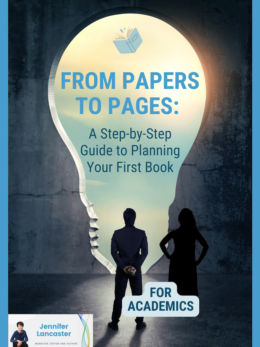
Academics Book Planner: From Papers to Pages
Original price was: $11.00.$7.00Current price is: $7.00.