
How Online Training Leaders are Moving from Marketing Hustle to Automated Growth
1. How Training Leaders have Gone Digital
Niche training businesses are no longer headquartered and overhead-heavy. Zoom, Kajabi, Kartra, Thinkific and many other tools have allowed the rise of the online business coach and training-based consultant. These are not novices but established professionals with a proven track record of over three years in the field. This report lays out the problems and solutions for those scaling up using online marketing.
Those who got the formula right have annual revenues typically ranging from $AU100,000 to AU500,000.(1)
Operating with lean, virtual teams of one to five members, online educators can work wherever there is wifi and a good cafe but usually situate near like minds, in Australia’s cities. While technically proficient at an intermediate level, they are comfortable with foundational digital tools but often find themselves in need of guidance for more advanced strategic implementation.
Success as an online creator or training school has created a new set of complex challenges that embody a unique paradox. As these businesses scale, the very activities that drove their initial growth become sources of friction and instability. They are caught in a cycle where more summits, projects, or conference keynotes necessitates more work, leading to a state of perpetual hustle and time preparing.
This cycle manifests as several core pain points that impede further growth. The worst of these is the persistent inconsistency of lead generation, often described as a “feast/famine” revenue cycle.(3)
The Content Creation Time-Suck
Compounding this is the significant workload associated with content creation, particularly the time-intensive production of long-form blogs and newsletters.4
Plus, a critical gap exists between strategic planning and technical implementation, leaving these leaders struggling to efficiently execute their marketing visions.5
Finally, there is the perennial challenge of building and nurturing an engaged email list, which is foundational for promoting their core memberships and coaching/training.7
My central premise is that these challenges are not isolated issues to be solved with more effort or longer hours or more ads. Rather, they are symptomatic of an outdated marketing model. If you think marketing is about short-term ‘push’ marketing (constant ads), then it’s time to meet its more effective opposite: a proactive and systemised ‘thought leader / pull’ approach. Seth Godin has been talking about ‘pull’, or permission marketing, since 1999, but some online empire builders don’t seem to have received the message!
As alluded to in the book ‘Oversubscribed’ by Daniel Priestley, gaining a magnetism and waitlist can transform a successful yet unsustainable business into a scalable and enduring one. This utilises the power of group psychology and the fear of missing out.
Pop along to Jennifer’s webinar: Thought Leader Marketing. Listen to the latest statistics and changing trends in content marketing for training entrepreneurs and learning professionals.
2. A Strategic Shift: From Outbound Noise to Inbound Authority
The marketing landscape for online training leaders is defined by a choice between two contrasting paradigms: the old and the new. Rather than craft a message or cold call to a wide, generalised audience with the expectation that a small percentage will convert, think of pulling the right crowd of niche people towards you. Thought leader marketing is a ‘pull’ strategy centred on creating valuable content and experiences that naturally draw a targeted audience toward the leader and their business.9
The decline of outbound marketing’s effectiveness is directly linked to a shift in consumer behaviour, where individuals now possess greater control over the content and messaging they choose to consume, allowing them to easily skip or block ad interruptions.9
The inbound marketing model with a spokesperson at the centre is a strategic necessity for online training leaders. This is due to several critical factors that align the inbound attraction with the core nature of their business. SEO also seems irrelevant, as the leader focuses on being visible on many platforms: live, on-webinar, on-video, and writing newsletters. Side benefit: more known and visible names appear on chat generated texts without force.
First, the online coaching and consulting industry operates on a foundation of trust and credibility. The primary product is not a book or certificate but a relationship built on expertise and authority.5 An outbound, interruptive marketing approach is inherently at odds with this trust-based model. It disrupts the relationship before it can even begin. An inbound approach, however, which prioritises education and providing value, is perfectly aligned with the coach or trainer’s identity as a thought leader and trusted advisor.13
The very act of creating and distributing valuable content is, in effect, a demonstration of the business’s value proposition. This resolves the ethical tension for many coaches who feel uncomfortable with aggressive, high-pressure sales tactics. The marketing itself becomes a form of service.
Advertising is Too Risky
Second, most member-based institutes or niche training operators are established but still operating with limited resources. Outbound marketing en masse can be prohibitively expensive, and its return on investment is notoriously difficult to measure accurately.10 This high-risk expenditure is a significant liability for a business in the AU$100,000-500,000 revenue range because they need to expend from $5,000 a month on ads to reach a market and create/optimise campaigns.
The inbound model, conversely, is typically more affordable and provides highly quantifiable metrics.10 By leveraging digital marketing software, leaders can track everything from website traffic and lead generation to sales conversions, enabling them to make data-driven, resource-efficient decisions.15 Data gathered can be transferred easily to sales agents too.
Finally, the most acute pain point identified in the research is the time-intensive workload of content creation, particularly at higher production values. 10
Rather than be so concerned with the time taken in creating videos or guides, think about the risk reduction and the higher chance of authority you’ll earn long term.
The modern training leader must begin to view free content as the central engine of their business, not a mere burden. The solution lies in doing it more strategically: a single piece of content can serve different functions simultaneously—generating leads, building authority, and nurturing an audience. This strategic approach to content, particularly through repurposing, is a critical component of the new marketing playbook.
Inbound vs. Outbound Marketing for Online Training Leaders
| Feature | Inbound Marketing | Outbound Marketing |
| Audience Targeting | Highly specific audience segments | Broad, generalised audience |
| Customer Interaction | Interactive, nurturing funnel | Inert, one-way communication (except calls) |
| Primary Channels | Blogs, Webinars, Emails | Ads, Billboards, Cold Calling, Cold email |
| Cost | Typically lower cost | Can be very expensive |
| Tracking & ROI | Easy to measure through digital metrics | Difficult to measure with accuracy, as response may not be related to click |
(Source: 10, 11, 16)
3. Diagnosing the Knocks in the Engine
The biggest challenges faced by training leaders/coaches are quite similar to other service businesses. The most pressing issue is the looming state of inconsistent cash flow. This instability is a direct consequence of relying on referrals or hit-and-miss advertising for lead generation.3
Instead of focusing on establishing a flow of new online prospects being warmed up, these businesses often rely on sporadic, large-scale company trainings or implementations. This is possibly the leftovers of a consultant, project mindset. This cash flow uncertainty is a major barrier to financial stability and strategic planning.
Although leaders can’t rely solely on consumer demand at first, simply realise that it’s far easier to run an established membership or live cohort than to do a 40-page proposal with two meetings before getting one dollar in the door.
One way to address the content creation trap is to fundamentally change how it is approached. I was watching a Chris Do (The Futur) interview and he spoke about how content was never any good when he tried to outsource it to SMM agencies. His solution: get help with output by first having all your foundational concepts, voice and mottos in a long presentation, which forms the basis of 100 other pieces of content by a creative marketing supporter.
Time and Technical Implementation
The demanding, time-intensive nature of producing high-quality blogs, videos and email newsletters is a major source of burnout.4 This problem is particularly acute for lean teams where a single individual is often responsible for research, writing, editing, and distribution. The pressure to produce content at scale to keep up with others is often overwhelming. The challenge is not just the volume of content required but the labor-intensive workflow required to produce it.
You wouldn’t get a Mini mechanic to fix your Porsche and it’s the same with marketing execution. The “technical implementation gap” represents the chasm between what you envision as world-class attraction marketing and what is achieved in reality. Kerwin Rae was the first to bring this problem to our attention.
Having the knowledge of driving the car (your CRM, LMS and CMS) doesn’t mean that you’ve got the specialised knowledge to weave in brand, sales copywriting, design and technical integrations that work to attract and convert online.
Is your company a small team of trainers doing keynotes, giving workshops or implementing change? Managing disparate platforms for scheduling, proposing, online courses, email marketing, and customer relationship management (CRM) creates fragmentation.5 This disjointed technical infrastructure wastes valuable time, is hard to judge in terms of meeting objectives, and can cause a failure to capture and nurture leads effectively.6
Lacking an integrated system and someone to oversee it, your company loses the efficiency needed to scale. Leaders may need something that’s simpler to run, with better insights. Pick software with simple visual dashboards and ones that don’t charge a fortune per user licence.
Finally, the challenge of list building goes beyond simply collecting email addresses. The true difficulty lies in growing an engaged email audience, which is the cornerstone for promoting and selling courses and high-ticket services.7 In contrast, a list that is poorly managed or bought in becomes just another form of outbound noise, with low open rates, high unsubscribe rates, and a wasted effort.
Without a strategic approach to building a high-quality, receptive audience, email marketing cannot function as the powerful sales and re-engagement tool it is intended to be.(18) It is this deep-seated engagement, not the sheer number of subscribers, that forms the foundation for lasting business relationships. Also, never forget content sharing partnerships.
4. The New Marketing Playbook: Strategies for Sustainable Growth
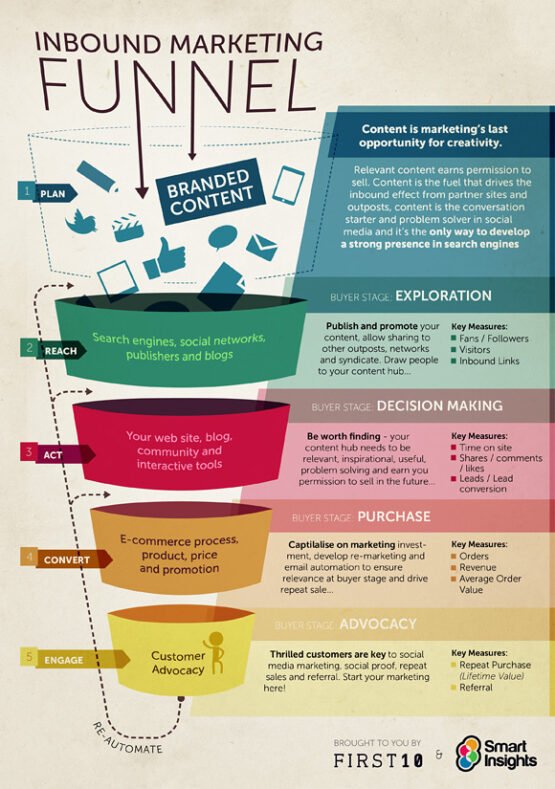
The solution to the pain points lies in a new, integrated marketing playbook that moves beyond siloed tactics. Webinars, for example, are not merely a single marketing tool but a strategic cornerstone of the entire inbound funnel.19 They serve as a powerful conversion engine that consistently attracts, nurtures, and converts leads. Webinars function as high-value lead magnets, attracting potential clients and providing a rich source for data collection, lead scoring, and list building.(16)
A single webinar, with event marketing, can be the foundation of a repeatable funnel that halts the “feast/famine” problem by creating a predictable stream of new prospects. This process has a clear progression; we must build:
Awareness at the top of the funnel by creating vibrant imagery/stories* and promoting the webinar; nurturing Interest through pre-event communications; driving Consideration during the webinar itself by addressing pain points and presenting a clear solution; and prompting Purchase with a compelling call-to-action. (16, 19)
The process concludes with nurturing Loyalty through post-webinar follow-ups and continued engagement. (16)
* Stories can be case studies of past students or ‘composite’ before and afters of coaching clients.
Building on the foundation of webinars and lead generation, a strategic approach to email nurturing is paramount. The core principle is to consistently deliver valuable, educational content that demonstrates expertise and builds a trusting relationship with the audience.(8) This practice provides a compelling reason for recipients to open emails and positions the sender as a reliable authority in their niche. A key element of this is segmentation into groups based on psychographics, purchase history or engagement level.(18)
This allows for highly targeted and relevant communication, which is the direct opposite of a mass, one-size-fits-all email blast. An automated welcome sequence is also recommended to set expectations and provide immediate value to new subscribers, fostering engagement from the very first interaction.8 (See my webinar).
Long-form blog content and thought leadership form the bedrock of this entire strategy. Blog posts or guest posts are the primary vehicle for building credibility, showcasing expertise, and establishing authority.(4) However, successful content goes beyond merely providing information. It takes a “distinct stance” and offers a unique perspective that sets the business apart from competitors.(14) This strategic differentiation is essential for attracting a specific client base that aligns with the business’s core philosophy. It also saves time spent on tyre-kickers.
This approach not only addresses the need for a defined niche but also transforms content creation from a chore into a core business function. Thus, a well-crafted, in-depth blog post can serve as a “pillar” piece of content, which can then be broken down and repurposed into a wealth of material for other marketing channels, laying the groundwork for a scalable content workflow.
5. Scaling: Technology and Processes to Overcome the Barriers
To move beyond the daily hustle and be guided by insights, online training leaders must adopt a streamlined technology stack. A Customer Relationship Management (CRM) system now becomes a necessity. For a small team, a CRM ensures that no lead or client relationship falls through the cracks, allowing the business to maintain a high level of personalised service while scaling. Even for those building online empires, CRMs can be worth their weight in gold for media tracking, peer partnerships, meetings, etc.
The choice of technology involves considering integrated software (with an API) and all-in-one platforms. A platform designed specifically for coaches or trainers, such as Paperbell, can solve significant technical friction points by consolidating scheduling, payments, prospect lists and client management into a single, intuitive tool.6
This simplicity is ideal for solo coaches or small teams who want to automate administrative tasks without being overwhelmed. Usually, you won’t find custom-branded Learning Management Systems (LMS) at lower price points but it’s better to get a beaut user-experience and integrate with the scheduling and payments system instead.
In contrast, a full-fledged marketing automation platform like ActiveCampaign or Brevo [read my comparison article] offers the power to automate complex cross-channel customer journeys and scale with the business. 26 The right choice depends on the specific needs of the business, but all modern email marketing platforms provide the necessary automation to free up time for high-value work.
Solving the Content Creation Problem
A modern course creators’ solution for the “content creation workload” pain point is the adoption of a content repurposing workflow. This strategy positions a single, high-quality, long-form piece of content—such as a comprehensive webinar or a detailed blog post—as a “pillar piece” that can be broken down and adapted for various channels.27
This process is the key to creating a consistent, multi-channel presence without creating new content from scratch every time. A webinar transcript can be broken down into a series of assets. The audio can become a podcast episode, while key segments and quotes can be used to create blog posts, short video clips for social media, and graphics for platforms like Instagram.28
This approach also addresses the inconsistency of the “feast/famine” cycle: with a consistent flow of content to attract and nurture leads.7
In effect, just one high-quality piece of content can be used to fuel a sustained, multi-channel presence. This sustained visibility creates a consistent flow of inbound leads, as long as you have a trusted marketing partner. As Daniel Priestley said in a recent interview video, strategic creation and positioning is a powerful tool for a business aiming for sustainable, scalable growth. (Start three minutes in).
Sample Content Repurposing Workflow: From Webinar to a Month of Content
| Day | Content Type & Action | Description |
| Day 1 | Webinar Broadcast & Recording | Live event, video and audio captured. |
| Day 3 | Podcast Episode Release | Publish the webinar audio on a podcast platform. |
| Day 5 | Blog Post | Transcribe the webinar; edit into a detailed blog post with key takeaways. |
| Day 7 | Email Newsletter | Send a newsletter summarising key points and linking to the blog and recording. |
| Week 2 | Social Media Snippets | Create short, 15-60 second video clips for platforms like Instagram Reels and YT Shorts. |
| Week 3 | Quote Cards & Graphics | Design visual assets with key quotes and stats for Instagram, LinkedIn, and Facebook. |
| Week 4 | Re-engagement Post | Create a final post prompting a key question and linking back to the original blog or course. |
The Modern Training Leader’s Technology Stack
| Software Category | Purpose | Example Tools |
| CRM & Admin | To centralise client data, streamline scheduling, and automate payments. | Paperbell 6, ActiveCampaign 26 |
| Email Marketing | To build and nurture an engaged email list through automated sequences and targeted campaigns. | ActiveCampaign 26, Kit, Brevo |
| Course & Coaching Platforms | To host and deliver core services; some offer integrated marketing tools. | Kajabi, Thinkific, Heights Platform 32 |
| Content Management | To create and manage blog content, websites, and content repurposing workflows. | WordPress 32, StoryChief 30 |
| Webinar Hosting | To host live events, record sessions, and capture lead data. | Thinkific 20, WebinarNinja 33 |
Note: Seek advice from your strategic marketing consultant before diving into a new tech platform.
6. Key Recommendations for the Modern Training Leader

Based on the analysis of the challenges and opportunities, I offer several key recommendations for online training leaders seeking to move beyond perpetual grind and hustle.
The first recommendation is to strategise, don’t hustle. Success in the modern market is all about using the right technology to work smarter. The leader should focus on building a strategic, scalable system for lead generation and client management rather than relying on reactive, short-term efforts that are time-consuming and unsustainable.
The second recommendation is to leverage pillar content. The most impactful single action a leader can take is to dedicate their resources to creating one high-quality, long-form piece of content—such as a comprehensive webinar, an in-depth guide, or a detailed case study—that can then be strategically repurposed across every other marketing channel. This approach maximises the return on a single creative effort and ensures a consistent, valuable presence.
A third recommendation is to automate what is repetitive. Implementing a streamlined, integrated technology stack is crucial for overcoming the technical implementation gap. By automating administrative and marketing tasks, such as email sequences, scheduling, and payment processing, the leader can free up their time and mental energy to focus on high-value work—the coaching and consulting itself. (Jennifer and team can help you with this work over a three month period).
Finally, a leader must prioritise engagement over numbers. The true value of a marketing effort lies in the quality of the relationships it creates, not the sheer quantity of followers or subscribers. The focus should be on building a high-quality, engaged email list and a thriving community, as these are the audiences most likely to convert into loyal, long-term clients.
Don’t forget your straightforward message. Words matter, make no mistake.
7. Conclusion: From Hustle to Legacy
The challenges faced by online training leaders—the inconsistent revenue, the content creation workload, and the technical implementation struggles—are clear signals that they have outgrown the reactive, hustle-based marketing models that defined their early success. This report has demonstrated that the solution lies in a fundamental and deliberate shift in strategy. By embracing the principles of inbound marketing, which prioritises building authority and trust through valuable content, these leaders can transform their businesses.
These tactics are not isolated. Webinars act as a repeatable conversion engine, while emails and summit-based thought leadership are used to build strong relationships. This entire process is made scalable by leveraging technology and repurposing content. They form a cohesive, powerful system that directly addresses and solves the core pain points.
This new paradigm allows online training leaders to escape the feast/famine cycle and build a scalable, sustainable business. Just as we all want more time freedom, most of us educators also want to build a lasting legacy of deep insights.
Works cited
- UpScale Business Coaching – Scale Your Trade Business, https://www.upscalecoaching.com.au/
- Business Coach Australia – MGI Australasia, https://www.mgiaust.com/services/business-coaching/
- Reduce the Feast and Famine Cycle in Your Digital Agency – Dryrun, https://www.dryrun.com/blog/reduce-the-feast-and-famine-cycle-in-your-digital-agency
- How to Create a Content Strategy Plan • Rebecca Ellison Creative – Brand Coach and Photographer, https://rebeccaellison.com/blog/how-to-create-a-content-strategy-plan/
- 5 Biggest Challenges Business Coaches and Consultants Faces – Wiser Notify, , https://wisernotify.com/blog/challenges-online-business-coaches-and-consultants-face/
- The Best CRM for Coaches Who Are Sick of the Tech Overwhelm, , https://paperbell.com/blog/crm-for-coaches/
- 7 ways to grow your email list (if you’re a new coach) – Copyhackers, , https://copyhackers.com/2022/08/how-to-grow-your-email-list/
- Email Marketing for Coaches: How to Grow an Engaged Email List, https://www.createcoachingconsulting.com/email-marketing-for-coaches/
- Modern Marketing – ActionCOACH, https://www.actioncoach.com/articles/blog/modern-marketing
- Inbound vs Outbound Marketing: The Differences – Adobe for Business, https://business.adobe.com/blog/basics/inbound-vs-outbound
- Inbound Vs Outbound Marketing – What’s the Difference? | Outbrain, https://www.outbrain.com/blog/inbound-vs-outbound-marketing/
- Overcoming the 7 Major Challenges When Starting Your Coaching Business, https://www.mikeblissett.com/blog/overcoming-the-7-major-challenges-when-starting-your-coaching-business
- The Ultimate Guide to Thought Leadership Marketing – Strategies, Best Practices, and Surprising Insights – Sarah Moon Consulting, https://sarahmoon.net/blog/thought-leadership-marketing
- Thought Leadership: The Key to Professional Services Growth, https://www.rattleback.com/insights/articles/thought-leadership-growth-value-creation/
- Old vs. Modern Marketing Concepts: What Works Best?, https://upswellmarketing.com/blog/old-vs-new-marketing-strategies-what-works-best/
- Webinar lead generation: how to get it right in 2025 | Kaltura https://corp.kaltura.com/blog/webinar-lead-generation/
- The Feast and Famine Cycle: Unlocking Stable Growth – GoWP, https://gowp.com/the-feast-and-famine-cycle-breaking-free-with-recurring-revenue/
- 18 Email Marketing Best Practices For Online Course Creators – Heights Platform, https://www.heightsplatform.com/blog/email-marketing-best-practices-online-course-creators
- How to Create a Webinar Funnel That Converts, https://ewebinar.com/blog/webinar-funnel
- Create & Sell Coaching & Webinars with Thinkific, https://www.thinkific.com/features/coaching-webinars/
- How To Create Webinar Content That Teaches and Sells – Million Dollar Coach, https://milliondollarcoach.com/blog/create-webinar-content-teaches-sells/
- Top 10 Online Course Creation Trends for 2024 – Heights Platform, https://www.heightsplatform.com/blog/top-10-online-course-creation-trends-for-2024
- Would love advice on using email marketing for selling courses. – Shopify Community, https://community.shopify.com/c/email-marketing-ama-questions/would-love-advice-on-using-email-marketing-for-selling-courses/m-p/2981933
- 37 Content Ideas for Coaches That Attract, Engage, and Convert – Kartra, https://kartra.com/blog/content-ideas-for-coaches/
- 7 Best CRMs for Consultants & Consultancies [+ How to Best Set Up] – Salesflare Blog, , https://blog.salesflare.com/best-crm-for-consultants
- ActiveCampaign: Marketing automation for any business, , https://www.activecampaign.com/
- setfirecreative.com, , https://setfirecreative.com/content-repurposing-how-to-turn-one-post-into-a-month-of-content/#:~:text=Break%20It%20Down%20into%20Core,%2C%20platforms%2C%20and%20audience%20preferences.
- Content Repurposing: How to Turn One Post into a Month of Content – Set Fire Creative, https://setfirecreative.com/content-repurposing-how-to-turn-one-post-into-a-month-of-content/
- 14 Ways to Repurpose Content to Increase Reach | Livestorm, https://livestorm.co/blog/repurpose-content
- How to Repurpose Your Webinar (and Why You Should) – StoryChief, https://storychief.io/blog/webinar-repurposing
- How to Start an Online Coaching Business in 2025 – WP Minds, https://wpminds.com/online-coaching-business/
- How to Build Email Marketing Base Using Webinars?, https://www.livewebinar.com/blog/webinar-marketing/how-to-build-email-marketing-base-using-webinars
- Is WebinarNinja Right for You? Video. https://www.youtube.com/watch?v=Akz31pYMY9w

Categories
Related Books or Services


Academics Book Planner: From Papers to Pages
Original price was: $11.00.$7.00Current price is: $7.00.